Health and Safety Policy for Landscaping Manor Park
 This Health and Safety Policy sets out the standards for carrying out landscaping work safely, responsibly, and with respect for everyone involved. In Landscaping Manor Park, the aim is to prevent injury, reduce risk, and maintain a safe working environment during all grounds maintenance, planting, turf care, hard landscaping, and site-cleaning activities. Safety is not treated as a separate task; it is part of every job, every day.
The policy applies to employees, supervisors, subcontractors, and anyone supporting landscaping services. It covers tasks such as operating machinery, handling tools, lifting materials, working near traffic, using chemicals, and moving across uneven ground. A safe workplace depends on planning, awareness, and consistent action. Every person is expected to take reasonable care for their own safety and the safety of others.
 We recognise that landscaping work can involve changing conditions, physical effort, and exposure to weather, noise, dust, and moving equipment. For this reason, risk assessment is a core part of our approach. Before work begins, hazards must be identified and controlled. Where needed, work should be paused or adjusted to reduce danger. Preventive measures are always preferred over reactive responses.
Managers and supervisors are responsible for ensuring that safe systems of work are understood and followed. This includes checking that workers are trained for the tasks assigned to them, that tools and machinery are fit for use, and that protective equipment is available and worn correctly. Good supervision supports safe landscape maintenance by making sure standards remain consistent across different sites and activities.
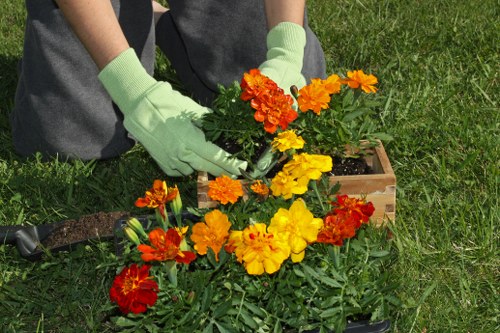
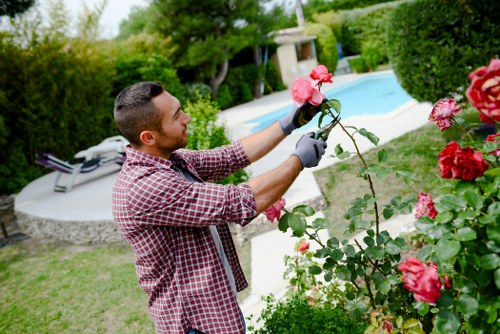
The use of personal protective equipment is mandatory where required by the task. Depending on the job, this may include gloves, eye protection, hearing protection, safety boots, high-visibility clothing, or weather-appropriate gear. PPE must be inspected before use and replaced when damaged. It is not a substitute for careful work practices, but an important layer of protection in landscaping operations.
 Plant, machinery, and hand tools must be stored, transported, inspected, and maintained in a safe condition. Defective equipment must not be used. Guards and safety features must remain in place, and fuel, batteries, or sharp components must be handled carefully. Only trained and authorised personnel should use powered equipment. Safe use of machinery is essential in landscaping maintenance to prevent cuts, crush injuries, and mechanical accidents.
Manual handling is a significant risk in outdoor work. Whenever possible, heavy lifting should be avoided through the use of mechanical aids or by splitting loads into smaller, manageable parts. Workers should use correct lifting techniques and ask for assistance when items are awkward, heavy, or unstable. Planning the task well reduces strain and helps protect long-term health.
Health and welfare are also important parts of this policy. Landscaping tasks may involve prolonged bending, repetitive movement, or working in adverse weather. Supervisors should monitor for signs of fatigue, dehydration, heat stress, cold exposure, and overexertion. Breaks, hydration, and suitable work pacing should be arranged where necessary. A safe landscaping environment supports both immediate safety and lasting wellbeing.
Hazardous substances, including fuels, oils, fertilisers, and treatments used for plant care, must be stored and used in line with safe handling practices. Labels should be read, containers kept secure, and spills dealt with promptly. Workers must understand the risks before using any product. When chemicals are involved in landscaping work, careful control protects people, plants, water, and surrounding surfaces.
Work areas should be kept tidy and organised to reduce trips, slips, and falls. Waste, loose materials, cords, and tools should not be left in pathways or public areas. Where work takes place near pedestrians, vehicles, or other site users, barriers, signage, and clear communication must be used to separate hazards from people. Good housekeeping is a simple but essential safety measure.
 Emergencies must be managed through clear procedures. First aid arrangements should be available, and staff should know how to respond to injuries, fire, severe weather, or equipment failure. Incidents, near misses, and unsafe conditions must be reported without delay so that corrective action can be taken. Learning from events helps strengthen landscaping safety and reduce the chance of recurrence.
Training and competence are central to this policy. New workers must receive induction on safe working practices, and ongoing training should be provided where tasks, equipment, or risks change. Everyone involved in landscaping Manor Park activities should understand the hazards of the work and how to control them. A well-trained team is better able to deliver quality results while maintaining safety standards.
 This policy will be reviewed regularly to make sure it remains effective, relevant, and aligned with current working practices. Improvements may be introduced when risks change, new equipment is used, or lessons are learned from inspections and incidents. By keeping safety at the centre of every project, Landscaping Manor Park promotes a responsible, professional, and secure approach to all landscaping activities.